Fix Wet Backyards: Drainage Solutions in Louisville
Drainage, Landscaping, Backyard Solutions, Louisville KY
How to Fix a Wet or Soggy Backyard in Louisville, KY
Persistent standing water, mud, and soft spots can turn a Louisville backyard into a safety hazard and a source of stress. With our local clay soils, heavy storms, and older grading patterns, backyard drainage solutions Louisville KY require a careful, professional approach rather than quick fixes.
Start with Diagnosis: Where Is the Water Really Coming From?
The most important step in fixing a wet or soggy backyard in Louisville is finding the true water source. Without this, even an expensive drain system can fail or simply move the problem somewhere else on your property.
Does water collect after every rain, or only after heavy storms?
Are downspouts dumping water next to the foundation or patio?
Does water appear to flow from neighboring properties or higher ground?
Is the lawn compacted, thin, or bare in the soggy area?
A professional drainage assessment from a local team like East Louisville Outdoor Services includes walking the property, checking slopes, observing downspouts and sump pump discharge, and considering how Louisville’s clay soils and existing landscaping affect runoff. This diagnostic work guides which solution—or combination of solutions—will actually solve the problem long term.
Standing Water, Mud, and Recurring Drainage Problems
Persistent puddles and mud are more than a nuisance. They can:
Damage turf roots and landscaping, leading to thin or dead grass
Create slick, unsafe walking areas for family and pets
Encourage mosquitoes and other pests that thrive in standing water
Contribute to foundation and basement moisture issues over time
When you see the same spots staying wet days after rain, or you have to avoid parts of your yard every spring, it is a sign that the grading, drainage, or lawn structure is not working with our local rainfall patterns. That is when a targeted, professional solution is worth serious consideration.
Why a Single Drain Is Rarely the Whole Answer
It is tempting to think, “If I just add a drain right here, the problem will go away.” In reality, a single surface drain or short section of pipe often treats only the symptom, not the cause. If water is still entering the area from downspouts, higher ground, or poor grading, that lone drain can be overwhelmed or simply move water to another low spot.
Effective backyard drainage solutions in Louisville typically combine source control (such as redirecting roof water) with site design (grading, swales, or French drains) and, when needed, planting strategies like rain gardens. A thoughtful plan protects the lawn, hardscapes, and your home together, rather than relying on a single “magic” drain box.
Six Proven Backyard Drainage Solutions for Louisville Yards
1. Downspout Extension or Redirection
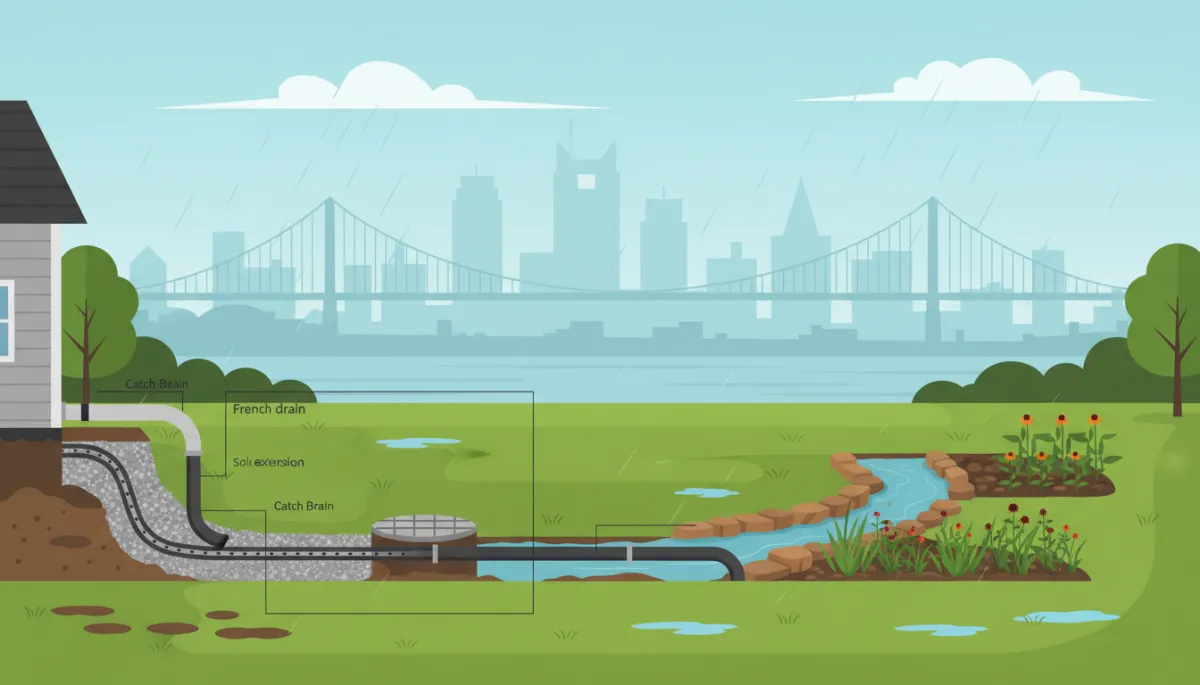
Roof runoff is one of the largest water sources on most residential lots. If your downspouts discharge right at the foundation or into a low area of the backyard, they may be overloading the soil. Extending or redirecting downspouts to a safer discharge point—or into a buried drain line—can dramatically reduce sogginess around patios, play areas, and foundations.
2. Regrading to Restore Proper Slope
Over time, settling soils, previous construction, and DIY projects can disrupt the original grading of a yard. Professional regrading reshapes the surface so water flows away from the house and toward appropriate collection points. In Louisville’s clay soils, even subtle changes in slope can make a major difference in how quickly the yard dries out after storms.
3. Swales: Shallow, Controlled Drainage Channels
A swale is a gently sloped, shallow channel that guides water across the yard without causing erosion. Properly graded and sometimes lined with turf or stone, swales move water around patios, play spaces, or gardens and direct it to safe discharge areas or drainage systems. They are especially helpful when neighboring properties or hillsides contribute runoff to your yard.
4. French Drains for Subsurface Water Issues
A French drain is a perforated pipe set in gravel, typically buried along a low area or at the base of a slope. It collects water that saturates the soil and carries it away through a buried line. In Louisville, French drains are commonly used along soggy fence lines, behind retaining walls, or between homes where water tends to stand. The key is correct depth, slope, and a reliable discharge point.
5. Catch Basins and Solid Pipe Systems
Catch basins collect surface water from low spots, patios, or downspouts and connect to solid pipe that carries water away. These systems are effective when you have clear problem areas and a suitable location to discharge water safely. When designed correctly, they help keep surfaces usable and protect nearby structures from repeated saturation.
6. Rain Gardens and Planted Drainage Areas
Rain gardens are intentionally planted low areas designed to temporarily hold and absorb runoff. Deep-rooted, water-tolerant plants help move water through the soil and add beauty to the yard. In Louisville, rain gardens can be paired with downspout redirection or swales to manage stormwater in a more natural, visually appealing way while supporting pollinators and local ecology.
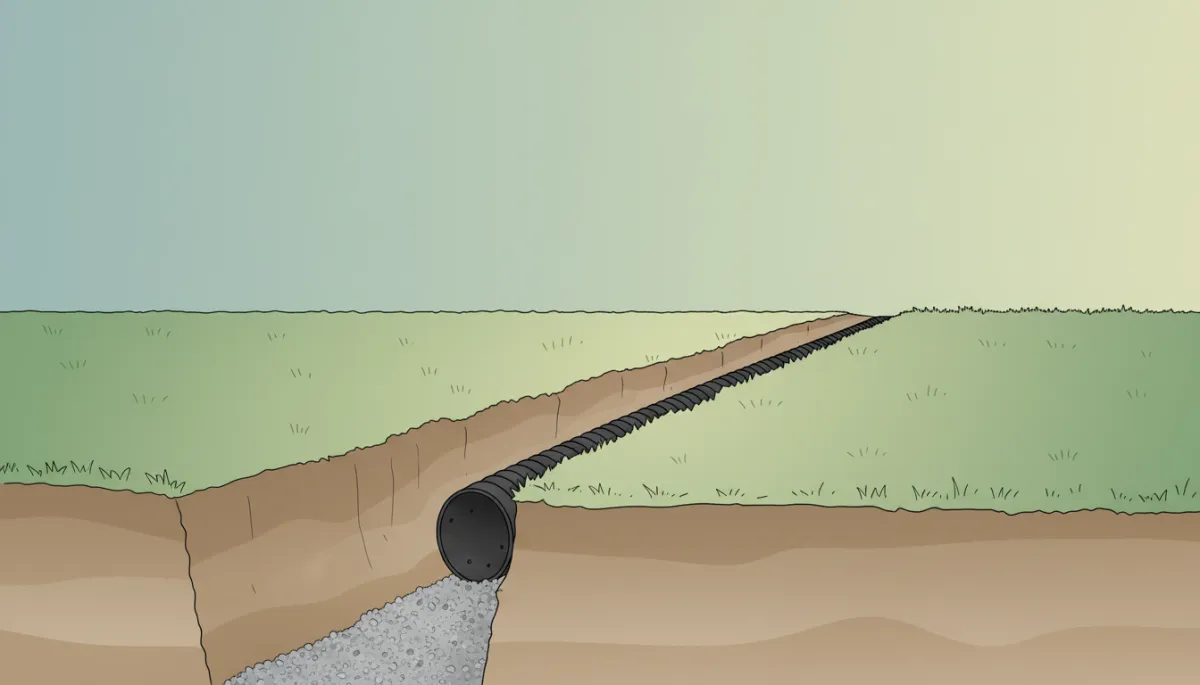
Combining grading, swales, and French drains often delivers the most reliable long-term drainage results.
What Not to Do with Backyard Drainage
Poorly planned drainage work can create new problems—or even violate local rules. Avoid:
Directing water onto a neighbor’s property. Pushing your runoff over the property line can cause disputes and potential liability if it damages their yard or foundation.
Connecting to storm or sewer systems without proper checks. In Louisville, tying into public systems or existing lines must be done correctly and, in some cases, may require approval or verification that the system can handle the added flow.
Installing drains with nowhere to go. Every drain needs an appropriate, legal discharge point and enough slope for water to move by gravity.
How Lawn Condition Affects Drainage
The health and structure of your lawn play a major role in how well water moves through the top few inches of soil. Compacted soil, heavy foot traffic, and thin turf reduce infiltration and cause water to sit on the surface. In contrast, a well-established lawn with healthy root systems helps absorb and slow runoff before it reaches low spots.
As part of a drainage assessment, East Louisville Outdoor Services evaluates whether aeration, topdressing, or lawn renovation should be combined with grading or drains. Addressing both the surface and subsurface conditions typically leads to a more durable solution and a healthier, more attractive yard.
Why a Professional Drainage Assessment Matters
Every property in East Louisville, Jeffersontown, and Jefferson County is unique. Lot shape, home placement, soil type, existing landscaping, and neighboring grades all influence how water behaves. A professional assessment looks at the entire site rather than just the worst puddle.
At East Louisville Outdoor Services, we combine drainage, grading, hardscape, and landscape design expertise to recommend solutions that protect your home, preserve your lawn, and support future projects such as patios, retaining walls, or outdoor living areas. Our focus is on long-term value, clear communication, and respect for your property from the first visit through final cleanup.
When to Act Quickly on Drainage Problems
Some wet spots are mostly an inconvenience. Others call for prompt attention. You should consider acting quickly if you notice:
Water pooling near the foundation, basement windows, or crawl space vents
Repeated flooding of patios, walkways, or play areas after normal rains
Erosion, exposed roots, or washouts in landscaped beds or around retaining walls
Musty odors or dampness in the basement that appear after storms
Addressing these issues early can prevent costly structural damage, protect your investment in landscaping and hardscapes, and keep your outdoor spaces safe and usable for your family.
Frequently Asked Questions About Backyard Drainage
Are French drains always the best option?
No. French drains are very effective for subsurface water and certain low areas, but they are not a cure-all. If the main issue is roof runoff or poor grading, a French drain alone may not solve the problem. Often, we combine French drains with regrading, swales, or downspout redirection for a complete solution.
Can I just add soil on top of a wet area?
Simply adding soil over a soggy spot may hide the symptom temporarily but rarely fixes the cause. In some cases, it can trap water closer to the surface or create new grading problems. Before adding soil, it is important to understand where the water is coming from and whether it has a clear path to leave the area.
How far should downspouts discharge from my house?
As a general guideline, downspouts should discharge at least several feet from the foundation, and often much farther in our local soils. Many Louisville homes benefit from buried downspout lines that carry water to the backyard, a swale, a rain garden, or another safe discharge point designed as part of a complete drainage plan.
Do rain gardens really help with drainage?
Yes—when designed correctly. Rain gardens are not ponds; they are shallow, planted depressions meant to hold water for a short time while it infiltrates. In combination with proper grading and downspout redirection, a rain garden can reduce runoff, filter water, and create an attractive feature that works with the natural flow of your yard.
Should drainage work come before or after landscaping and hardscapes?
In almost every case, drainage and grading should come first. Installing patios, walkways, plant beds, or lawns before addressing water issues can lead to damage, settling, or the need to tear out new work later. One advantage of working with East Louisville Outdoor Services is that we plan drainage, hardscapes, and landscaping together, so each element supports the others.
Take the Next Step Toward a Dry, Usable Backyard
Fixing a wet or soggy backyard in Louisville, KY is not about guesswork or quick fixes. It is about understanding how water moves across your specific property and choosing the right combination of solutions—downspout management, grading, swales, French drains, catch basins, and rain gardens—to protect your home and enhance your outdoor space for years to come.
If you are tired of avoiding muddy areas, worrying about your foundation, or seeing your lawn struggle after every storm, a professional evaluation is the most reliable way forward. Schedule an on-site consultation and estimate to discuss your property, goals, and the best backyard drainage solutions Louisville KY for your situation.
Call or text East Louisville Outdoor Services at +1 502-398-9352 to get started on turning your drainage challenges into an attractive, functional, and lasting outdoor space.
