French Drain vs Yard Grading: Best Drainage Solutions
Drainage, French Drains, Yard Grading, Louisville Landscaping
French Drain vs. Yard Grading: Which Drainage Solution Do You Need?
Standing water, soggy lawns, and damp basements are more than just annoyances—they can damage your home’s foundation, ruin landscaping, and create unsafe, muddy outdoor spaces. When homeowners start comparing French drain vs yard grading, it’s usually because they’re tired of temporary fixes and want a long-term solution that actually works. The right answer depends on how water moves across and under your property, and that’s where careful assessment and planning matter most.
French Drain vs Yard Grading: The Big Picture
Before choosing a solution, it helps to understand what each one is designed to do. Both French drains and yard grading are proven ways to manage water, but they address different types of problems and often work best as part of a coordinated drainage plan rather than as stand‑alone fixes.
What Is Yard Grading?
Yard grading—sometimes called regrading or reshaping the yard—is the process of adjusting the slope of your soil so that surface water naturally flows away from your home, hardscapes, and other vulnerable areas. Think of grading as setting the “path of least resistance” for rainwater on top of the ground. With the right slopes, water doesn’t have a chance to sit against your foundation or pool in low spots; it keeps moving to a safe outlet point instead.
What Is a French Drain?
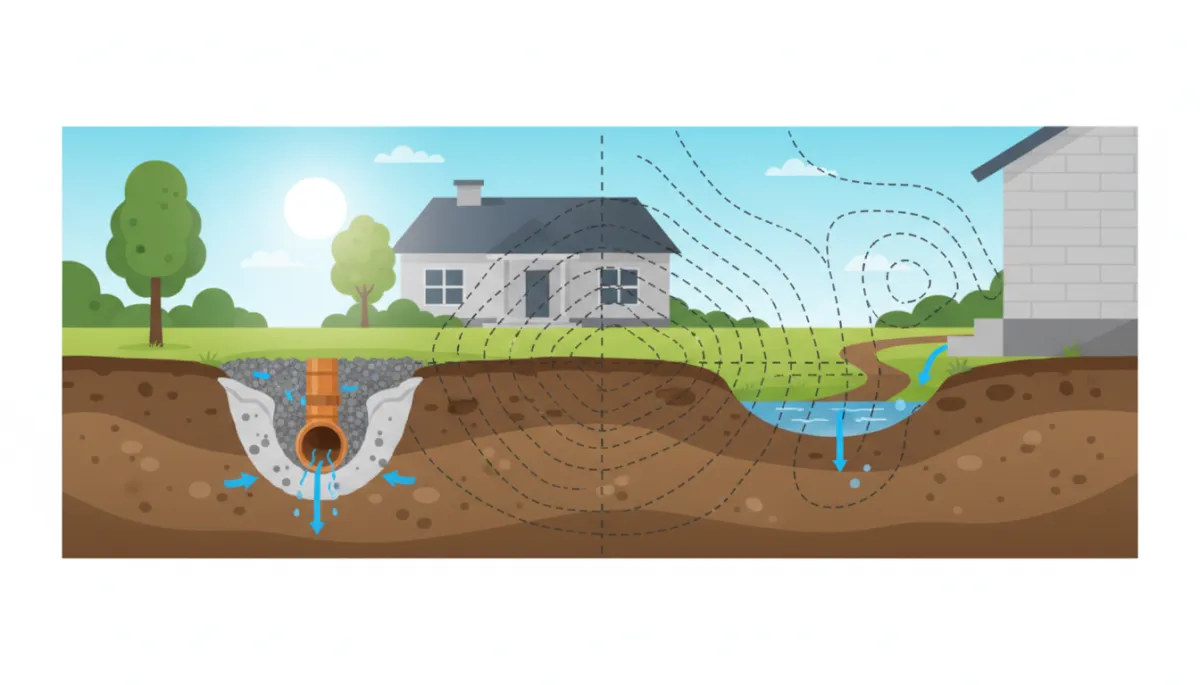
A French drain is a subsurface drainage system. It’s typically a gravel‑filled trench with a perforated pipe at the bottom, wrapped in fabric to keep soil out. While grading directs water you can see, a French drain collects and moves water you often can’t see—water that’s moving through the soil, seeping toward your foundation, or collecting in saturated areas where the surface looks relatively flat but stays soggy for days after a storm.
📌 Key Takeaway: Yard grading manages surface water flow. French drains manage subsurface water. Many properties in East Louisville and Jeffersontown benefit from a combination of both.
Understanding Surface Water Flow vs. Subsurface Water
To decide between a French drain vs yard grading, you first need to understand how water behaves on your property. Water problems usually fall into three overlapping categories: surface water, subsurface water, and concentrated discharge from structures like roofs and driveways. Each behaves differently and may call for a different solution—or a combination of solutions—designed for Louisville‑area soils and slopes.
Surface Water: What You See After a Storm
Surface water is the visible water that travels over the ground during and after a rainfall. Common signs include:
Puddles that linger for more than 24–48 hours
Water flowing toward, instead of away from, your foundation or garage
Channels or ruts in mulch, gravel, or bare soil where water cuts through
Erosion around downspouts, walkways, or driveways
Yard grading, swales (shallow, grassed channels), and properly routed downspouts are the primary tools for controlling surface water. When done correctly, these measures prevent water from ever reaching critical areas in the first place, which is almost always the best and most cost‑effective starting point.
Subsurface Water: The Hidden Problem in Saturated Soils
Subsurface water moves through the soil itself. In parts of Jefferson County where clay soils are common, water can become trapped below the surface, creating soggy lawns, soft spots, or hydrostatic pressure against foundation walls. Signs of subsurface water issues include:
Grass that squishes underfoot even when there’s no visible standing water
Persistent dampness along the inside of basement walls or slab edges
Water seeping into basements or crawlspaces after long, steady rains rather than short, heavy storms
Mushy areas in otherwise well‑sloped yards
This is where French drains shine. By creating an easy path for water to enter a gravel trench and perforated pipe, a French drain relieves pressure in the soil and carries that water to a safe outlet—away from your home and outdoor living spaces.
Combining grading and French drains manages both visible runoff and hidden groundwater.
Key Differences Between French Drains and Yard Grading
Although they share the same goal—moving water away from problem areas—French drains and yard grading do that job in different ways. Understanding these differences helps you and your contractor choose the right combination for your property.
Feature Yard Grading French Drain Primary focus Surface water flow Subsurface water and collected runoff Method Reshapes soil slopes and elevations Uses buried gravel and perforated pipe Visibility Changes the look and contour of the yard Largely hidden below ground once installed Typical uses Directing water away from house, eliminating low spots Relieving saturated areas, protecting foundations and hardscapes
When Yard Grading Is the Right First Step
In many cases, especially on properties that haven’t been thoughtfully graded since the home was built, regrading is the most important and cost‑effective starting point. East Louisville Outdoor Services often recommends grading when we see:
Soil sloping toward the foundation, garage slab, or patio instead of away from it
Depressions where water pools in the middle of the yard after every rain
Bare or eroded areas where runoff is cutting through the landscape
New hardscapes, additions, or pools that have changed how water moves across the property
Proper grading uses subtle but consistent slopes—often as little as 2–5%—to carry water away from the house and toward a suitable discharge point, such as a drainage swale, a lower part of the yard, or a dedicated outlet. This not only protects your home but also sets the stage for healthier lawns, more stable planting beds, and longer‑lasting patios, walkways, and driveways.
💡 Pro Tip: Grading is easiest and most effective when coordinated with other projects like patios, retaining walls, or new landscaping. East Louisville Outdoor Services routinely integrates grading into larger outdoor designs to avoid rework and extra cost later.
When a French Drain Makes Sense
A French drain is especially appropriate when surface grading alone can’t solve the problem. We typically recommend a French drain in situations such as:
Water consistently seeps into a basement or crawlspace even after improving surface slopes and gutters
A yard sits at the bottom of a hill and collects groundwater from neighboring properties or common areas
There are isolated, soggy zones where the surface looks level but the soil remains saturated
You need to protect a specific feature—like a retaining wall, driveway edge, or patio—from water pressure in the soil
Installing a French drain requires careful planning: setting the right trench depth and slope, choosing the appropriate pipe and aggregate, and ensuring the system has a reliable outlet. When designed correctly, a French drain quietly does its job for years, relieving water pressure and keeping problem areas dry on the surface.
Using French Drains and Yard Grading Together
On many Louisville‑area properties, the best solution isn’t choosing a French drain or grading—it’s using both in a coordinated way. For example, East Louisville Outdoor Services might:
Regrade soil so that surface water flows away from the house and toward a low point in the yard
Install a French drain along that low line to collect both runoff and groundwater
Tie in downspouts or sump pump discharge to the same system, so all water is managed together
This coordinated approach prevents one solution from simply pushing the problem somewhere else. Instead, the grading, French drains, and outlets are designed as a complete drainage plan that respects how water naturally wants to move across your property and neighboring lots.
Evaluating Water Sources and Behaviors on Your Property
Before committing to any drainage project, it’s essential to understand where water is coming from and how it behaves during different types of weather. A thorough assessment will look at:
1. Roofs, Gutters, and Downspouts
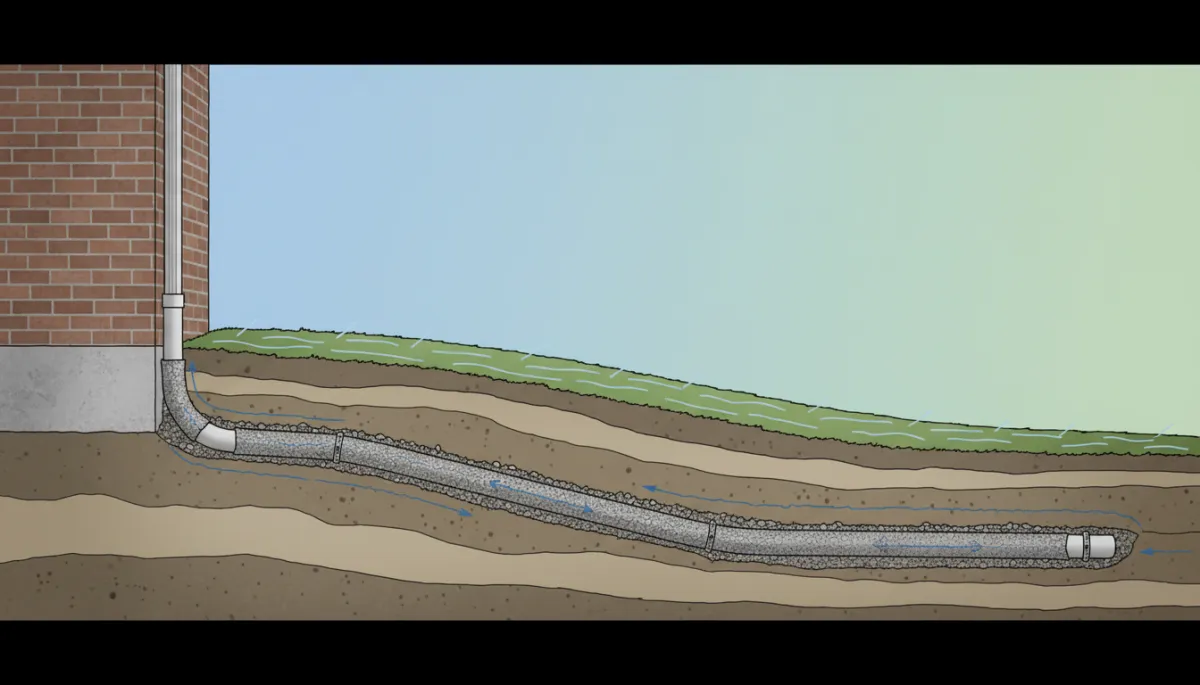
Roofs collect a large volume of water and concentrate it at downspouts. If those downspouts dump water right next to your foundation or onto a poorly graded area, problems are almost guaranteed. Redirecting downspouts into underground drain lines, splash blocks, or swales is often one of the simplest and most effective steps in a drainage plan.
2. Neighboring Properties and Shared Slopes
In many East Louisville neighborhoods, yards share gentle slopes, and water naturally flows from one property to another. A good drainage design respects these patterns and avoids pushing water onto neighbors. Sometimes, a French drain along a property line or a shared swale is the best way to manage runoff fairly and effectively.
3. Soil Type and Compaction
Clay‑heavy or compacted soils common in Jefferson County absorb water slowly and hold onto it longer. That can exaggerate both surface and subsurface water problems. During an on‑site consultation, we look for signs of compaction, test how quickly soil drains, and consider whether aeration, soil amendment, or deeper drainage like French drains are needed in addition to grading.
4. Timing and Duration of Water Issues
Do you see water only during intense storms, or does your yard stay soggy for days after a light rain? Sudden, heavy runoff often points to surface drainage issues and grading needs. Long‑lasting dampness points more toward subsurface water and the potential need for a French drain or similar system. Taking photos or short videos during rain events can be extremely helpful for diagnosis.
💡 Pro Tip: Keep a simple “rain journal” for a few storms—note where water collects, how long it stays, and whether it reaches your house. Sharing this with your contractor helps fine‑tune your drainage plan.
Critical Project Considerations: Outlets, Permissions, and Restoration
Whether you choose yard grading, a French drain, or a combination, the details of how the project is designed and built make all the difference. A trustworthy contractor will walk you through key considerations so there are no surprises during or after the work.
Drainage Outlets: Where the Water Ultimately Goes
Every drainage system needs a safe, legal outlet. For French drains and buried downspout lines, that might be:
A pop‑up emitter in a lower part of your yard where water can disperse safely
A connection to an existing drainage swale or common area (with permission)
Discharge into a gravel “dry well” designed to slowly release water into the soil
A French drain without a proper outlet is like a gutter that ends in the middle of your driveway—it may move water for a short distance, but it doesn’t truly solve the problem. East Louisville Outdoor Services always designs drainage systems with the full path of water in mind, from where it falls to where it safely exits your property.
Permissions, Regulations, and Neighbor Relations
In Jefferson County and surrounding communities, you may need to consider:
HOA rules about altering grades, adding swales, or discharging water into common areas
Local regulations regarding connections to storm drains, ditches, or easements
Informal agreements with neighbors when water naturally crosses property lines
A responsible drainage plan does not simply push water from your yard into someone else’s. East Louisville Outdoor Services emphasizes honesty, safety, and respect for neighboring properties when designing systems, and we encourage homeowners to address permissions and communication up front.
Restoration: Putting Your Yard Back Together the Right Way
Both grading and French drain projects involve excavation. Once the functional work is complete, a quality contractor restores disturbed areas so your yard looks finished—not like a construction site. Restoration may include:
Replacing topsoil and re‑establishing lawn with seed, straw, or sod
Rebuilding planting beds, edging, or mulch that were disturbed by trenching
Compacting and smoothing new grades to avoid future settling
Because East Louisville Outdoor Services is both a drainage and landscape designer, we plan restoration from the beginning so that your finished yard is not only drier, but also more attractive and functional than before.
Why a Coordinated Drainage Plan Matters More Than Any Single Feature
The most important lesson in the French drain vs yard grading conversation is this: no single feature is a magic fix. Effective drainage comes from a coordinated plan that considers:
How water arrives on your property (rainfall, roofs, uphill neighbors)
How it moves over and through the soil (surface flow and subsurface water)
Where it can safely go without harming structures, landscapes, or neighbors
A thoughtful plan might include grading, a French drain, downspout extensions, a small retaining wall, and strategic plantings that help stabilize soil. Each piece supports the others. When you approach drainage this way, you’re not just reacting to the latest puddle—you’re investing in the long‑term health, safety, and value of your property.
“We turn outdoor challenges into attractive, functional, and lasting spaces through careful planning and dependable workmanship.”
— East Louisville Outdoor Services
Choosing the Right Partner for Your Drainage Project
Because drainage work happens mostly underground or in subtle changes to grade, you’re really investing in the expertise and integrity of the team doing the work. A trustworthy contractor will:
Take time to observe your property, ask questions, and explain options in plain language
Design a coordinated drainage plan rather than selling one “fix‑all” product
Use quality materials and proper installation methods without cutting corners
Communicate clearly about schedule, access, restoration, and what to expect during and after the project
At East Louisville Outdoor Services, we combine drainage, grading, hardscape, and landscape expertise so your solution looks as good as it performs. From French drains and regrading to patios, retaining walls, and outdoor lighting, we design systems that work together—not against each other—for long‑term value.
Ready to Solve Your Yard’s Water Problems?
If you’re weighing a French drain vs yard grading, the safest next step is a professional on‑site assessment. Every property in East Louisville, Jeffersontown, Jefferson County, and the surrounding communities is unique—slopes, soils, structures, and neighbors all play a role. A proper evaluation of surface and subsurface water, outlets, permissions, and restoration needs will help you avoid wasted time and money on partial fixes.
Schedule an on‑site consultation and estimate to discuss your property, your goals, and the best drainage solution for your outdoor space. Call or text East Louisville Outdoor Services at +1 502‑398‑9352 and let our trusted local team help you turn water problems into a safer, more beautiful, and longer‑lasting yard.
